
Your fixed rate is ending in 2027: what to do now
Find your exact end date, learn what happens if you do nothing, and see when you can start lining up a new deal. Plus what to have ready before a review.
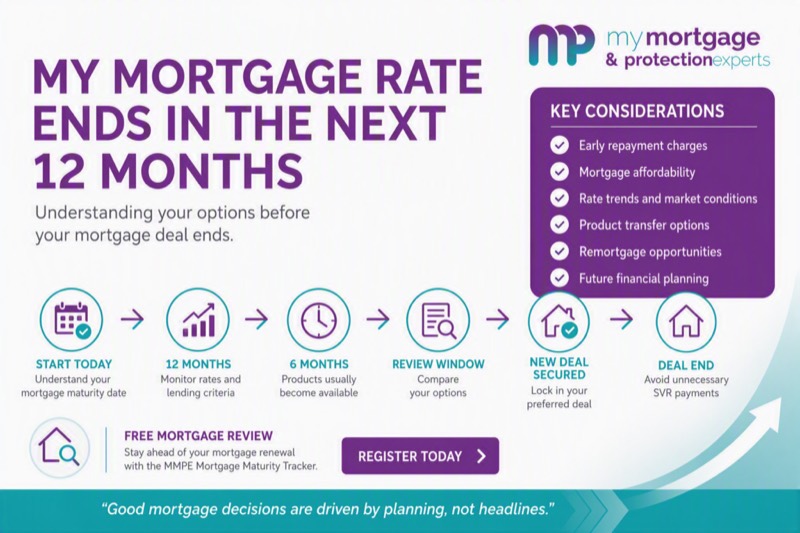
If you have a fixed rate ending in 2027, find your exact end date now and start looking at new deals about six months before it. Arrange a new rate before the date arrives, so you don't slip onto your lender's standard variable rate. Here's how to stay ahead of it.
Key takeaways
- Your end date drives everything, so find it on your mortgage offer, annual statement or lender's portal.
- If you do nothing, you'll move onto your lender's standard variable rate (SVR), which is often higher.
- You can usually secure a new deal three to six months ahead and still switch if rates fall before completion.
- Compare a product transfer with your current lender against moving to a new lender.
- Have a rough idea of your balance, property value and any changes to your finances before your review.
Why 2027 matters now
2027 can feel a long way off. In practice, the decisions that save you the most money happen months before your rate changes.
Starting early doesn't mean committing early. It means you know your date, your options and your costs, so you can act at the right moment rather than in a rush.
When does my fixed rate end?
Dig out your mortgage offer or log into your lender's portal and note the day your fixed rate ends. That single date drives everything else.
Your annual mortgage statement should show it too, along with your balance and current rate. Put a reminder in your calendar for six months before it, because that's when you can start lining up your next deal. Or register your mortgage end date with us and we'll get in touch.
What happens when a fixed rate mortgage ends?
When a fixed rate ends and you haven't arranged anything new, you move onto your lender's standard variable rate (SVR). This happens automatically.
The SVR is set by the lender. It tends to be well above the rates on new deals, and it can move up with little notice. Staying on it for even a couple of months can cost hundreds of pounds you didn't need to spend.
What are my options when my fixed rate ends?
You have two main choices:
- Product transfer. You stay with your current lender and move to one of their new rates. It's quick, usually needs little or no new affordability checking, and there are often no legal fees. Find out more about a product transfer.
- Remortgage to a new lender. You move your mortgage elsewhere to get a better rate or borrow more. There's more paperwork, but the savings can be larger.
Neither is automatically better. The right answer depends on the rates available, any fees involved, and whether your circumstances have changed. That comparison is exactly what a broker does for you.
Things that can change your options
A few things can widen or narrow the deals open to you. Your property's value matters, because a lower loan to value may give you a wider choice of rates. Changes to your income, new credit commitments or a move to self-employment can affect what a new lender will offer.
A timeline if your fixed rate is ending in 2027
The exact months depend on your end date, but the steps are the same:
- Twelve months before: find your end date and any early repayment charge, and note any changes to your finances.
- Six months before: start looking at deals with your current lender and across the market.
- Three to six months before: secure a new deal, with completion timed for when your fixed rate ends.
- In the final weeks: keep an eye out for any cheaper rate before completion, and check your new payment date.
If your deal is closer than you thought, our guide on what to do when your mortgage deal is ending in 6 months has a month-by-month plan. For a longer view, read what to do if your mortgage rate ends in the next 12 months.
When should I lock in a new mortgage deal?
You can usually secure a new deal three to six months ahead and still switch to a cheaper rate if one appears before you complete.
That way you're protected if rates rise, and you keep the upside if they fall. Locking in early doesn't have to mean locking yourself in.
What do I need to get ready for a remortgage review?
Before your review, it helps to have a rough idea of:
- your current mortgage balance
- your property's value
- any changes to your income or outgoings
If you've taken on new credit or your household income has changed, mention it early so there are no surprises. If you move to a new lender, expect to provide payslips, bank statements, ID and proof of address.
Our view
Getting your 2027 deal sorted isn't complicated, but timing makes a real difference. Know your date, start looking six months out, and compare your lender's offer with the wider market before you choose. When you're ready, see your remortgage options.
Stay ahead of your mortgage renewal.
Your mortgage deal doesn't need to be ending soon for you to start planning ahead. Register your mortgage end date with My Mortgage & Protection Experts and we can contact you at the right time to review your options.
Whether your deal ends in a few months or further down the line, we'll help you stay one step ahead.
Register your mortgage end date- 1Register your end dateNo obligation and no cost.
- 2We get in touch at the right timeBefore your deal ends, so there's time to plan.
- 3We review your optionsYour lender's offer against the wider market.
Frequently asked questions
How early can I lock in a new mortgage rate?
Most lenders let you secure a new deal three to six months before your current rate ends. You can often switch to a better rate if one comes along before completion, so locking in early protects you without tying you down.
What happens when my fixed rate mortgage ends?
If you haven't arranged anything new, you move onto your lender's standard variable rate (SVR). The lender sets it, it's often higher than a new deal, and it can move up with little notice.
When should I start looking for a new mortgage deal?
Start looking about six months before your fixed rate ends. You can usually secure a new deal three to six months ahead.
What is the difference between a product transfer and a remortgage?
A product transfer keeps you with your current lender on one of their new rates, and it's usually quick with little or no new affordability checking. A remortgage moves you to a new lender, which means more paperwork but possibly larger savings.
What do I need for a remortgage review?
A rough idea of your current mortgage balance, your property's value and any changes to your income or outgoings. Mention any new credit early so there are no surprises.