Mortgage Overpayment Calculator: See What Extra Payments Do
Even small extra payments can change your mortgage balance. Find out how overpayments work, what to check with your lender first, and how to try the numbers yourself.
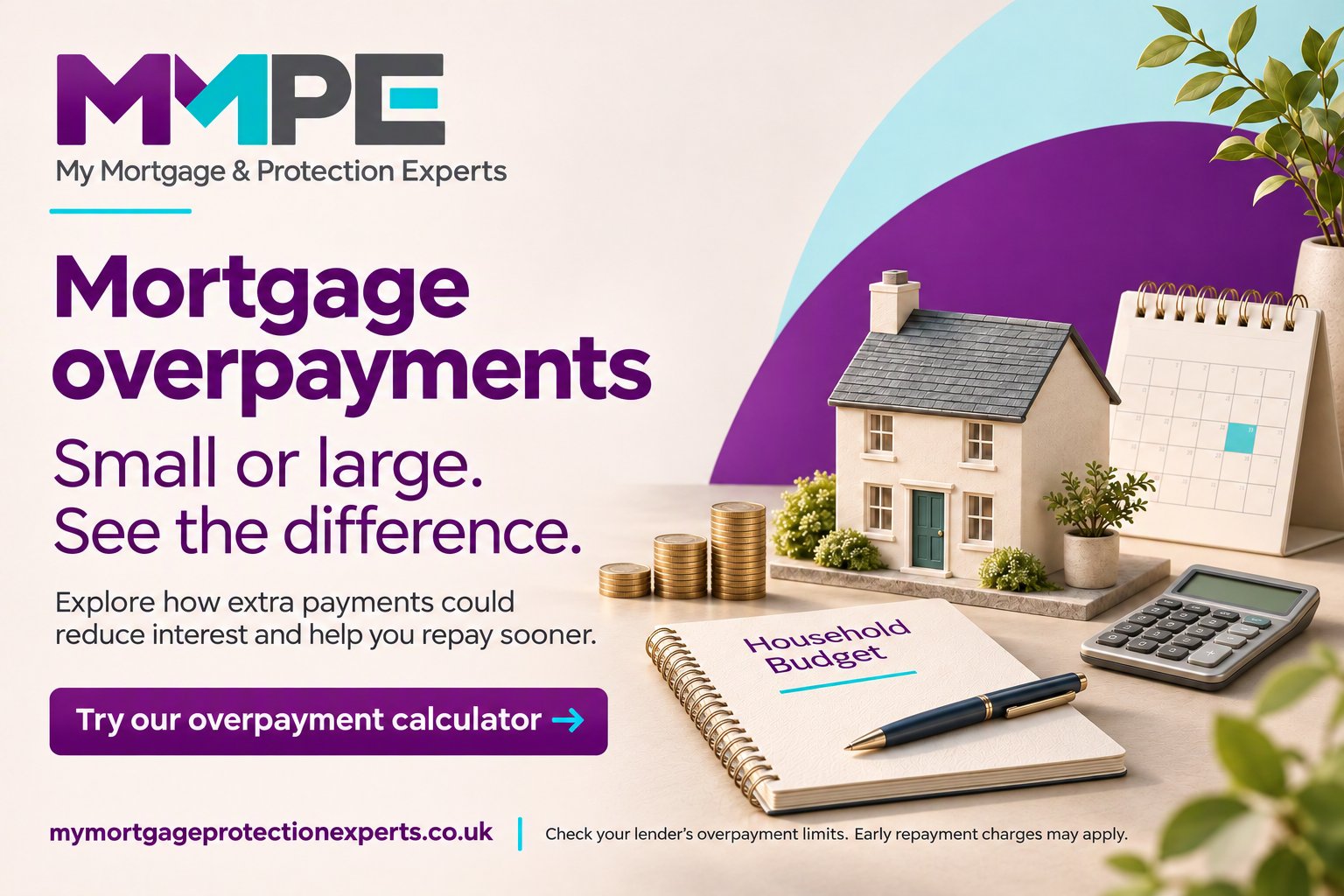
A mortgage overpayment calculator shows what paying extra each month, or a one-off lump sum, could do to your mortgage. Even small amounts may reduce the interest you pay and help you clear the debt sooner, although the result depends on your mortgage and how your lender applies the payment.
When we think about paying a mortgage off early, it is easy to imagine needing thousands of pounds sitting in the bank.
In reality, a mortgage overpayment can be much smaller. An extra £25, £50 or £100 a month can all contribute towards reducing your mortgage balance, while occasional lump sums can potentially make an even bigger difference.
The important question isn't simply "How much can I overpay?"
It is:
"What difference could an overpayment make to my mortgage?"
Try our mortgage overpayment calculator
Our MMPE Mortgage Overpayment Calculator has been designed to help you explore exactly that.
Try the MMPE Mortgage Overpayment Calculator
The calculator lets you explore mortgage overpayments and see an illustration of the interest you might save. Results are estimates and depend on your mortgage and how your lender applies the payment. [mymortgage...erts.co.uk]
Why does overpaying your mortgage make a difference?
With a repayment mortgage, each monthly payment gradually reduces what you owe while also paying the interest charged by your lender.
When you make an overpayment, you reduce the outstanding balance more quickly.
That can create two important benefits:
1. You could pay less interest
Reducing the balance means there is less mortgage debt on which future interest can be charged. This is the interest saved.
2. You could become mortgage-free sooner
Depending on your mortgage and how your lender treats overpayments, paying additional amounts towards the capital can shorten the time it takes to repay your mortgage.
The earlier an overpayment reduces the balance, the longer it may have to influence the interest you pay over the remaining mortgage term. Interest is charged on a lower balance for longer, so overpaying early in the term can have more effect than the same payment made years later. [mortgageowl.co.uk]
Will an overpayment reduce your term or your monthly payment?
It depends on the lender and the product. Some lenders use an overpayment to reduce the term, so you finish earlier. Others lower your monthly payment and keep the end date the same. Each lender has its own approach, so check with them.
If you want to reduce the term, ask your lender how to arrange it. They may need you to tell them which option you prefer.
Small overpayments still count
You don't necessarily have to make dramatic changes to your finances.
Consider what might be achievable within your normal monthly budget:
- £25 extra a month = £300 a year
- £50 extra a month = £600 a year
- £100 extra a month = £1,200 a year
- £200 extra a month = £2,400 a year
So a monthly overpayment of £50 means £600 a year paid towards your mortgage balance, if your lender applies it that way. Check your overpayment allowance first, as charges may apply.
That's before considering the interest that may subsequently be saved because your mortgage balance is lower.
A relatively modest overpayment maintained over a long period can therefore have a meaningful cumulative effect. You can check your usual payment with our mortgage repayment calculator and see how an extra amount sits alongside it.
And importantly, it doesn't have to be an all-or-nothing decision.
What about a lump sum?
Perhaps you've received a bonus, built up excess savings, received an inheritance or simply accumulated more cash than you need for your emergency fund.
A one-off lump sum paid into your mortgage could potentially reduce your balance immediately.
But paying a lump sum into your mortgage shouldn't be automatic.
Once money has been paid into most conventional mortgages, you can't simply withdraw it again if the boiler breaks or circumstances change. Flexible and offset mortgages may work differently. With an offset mortgage, your savings sit against the balance, so you can reduce the interest charged while keeping access to the money. [mortgageowl.co.uk]
Before committing a significant amount, consider your:
- emergency savings;
- upcoming expenditure;
- more expensive debts;
- mortgage interest rate;
- savings options;
- pension and investment objectives (you may want specialist advice on these); and
- need to retain access to the money.
Reducing the mortgage can be valuable, but so can retaining financial flexibility.
Should you overpay your mortgage or save instead?
The interest rate you're paying matters.
Reducing a mortgage balance means avoiding the mortgage interest that would otherwise have been charged on that part of the debt.
So rather than looking at an overpayment in isolation, it can be useful to compare what your money is doing elsewhere.
For example, someone with cash savings may want to compare the interest they receive from those savings, including the effect of any applicable tax, against the mortgage interest they could avoid. For tax questions, speak to a tax specialist.
That doesn't automatically mean overpaying is better. Access to cash, tax position, risk, pensions and longer-term financial objectives can all affect the decision.
What about credit cards and other debts?
If you also have credit cards or other borrowing with a higher interest rate than your mortgage, it can be worth looking at those first. Clearing a more expensive debt may save more interest than the same money paid into your mortgage. It is worth comparing the rates before you decide.
Check your overpayment allowance first
This one is important.
Don't make a large mortgage overpayment without checking the terms of your mortgage.
Many lenders allow borrowers to make a certain amount of overpayments without incurring a charge, and a figure of around 10% a year is common at the time of writing. However, this is not a universal rule. The overpayment allowance, how it is calculated and when it resets can differ between lenders and mortgage products. [mortgageowl.co.uk], [mortgageov...tor.org.uk]
The allowance can also differ between a fixed rate and a tracker mortgage or standard variable rate deal. Some products allow more flexibility than others, so check the one you have.
Going beyond the permitted amount during a period where an early repayment charge (ERC) applies could result in a charge. You can read more in our guide to early repayment charges. [moneyhelpdesk.com]
Check your mortgage offer, latest mortgage statement or speak to your lender before making a substantial payment.
When you pay, make sure your lender applies the money to your mortgage balance. Some lenders may otherwise treat it as an advance payment of future instalments, which would not reduce the balance in the same way. If you are unsure, ask them.
How much should you overpay? £25 or £25,000
There isn't one "correct" amount to overpay.
For one household, an extra £50 each month might be comfortable and sustainable.
Someone else may prefer to retain monthly flexibility and make an occasional £1,000 lump-sum payment.
Another homeowner might have £20,000 available but decide that only part of it should go towards the mortgage because maintaining accessible savings is more important.
This is where doing the numbers becomes useful.
Rather than guessing whether an overpayment is worthwhile, you can model the potential effect.
Try the MMPE Mortgage Overpayment Calculator
We've created our overpayment calculator to give homeowners a simple way to explore the impact that making additional payments could have on their mortgage.
Use the MMPE Mortgage Overpayment Calculator
Enter your mortgage information and experiment with different overpayment amounts. Our overpayment calculator is free to use.
Try £25.
Then £50.
Then £100.
Or see what could happen if you made a larger lump-sum payment.
Try different amounts to see what difference small changes could make over the remaining life of your mortgage. Results are illustrations, not guarantees.
Don't forget the mortgage itself
Overpayments are only one part of managing your mortgage effectively.
Your interest rate, remaining term and mortgage product can also affect the overall cost, and for some people the effect may be larger than overpaying.
If your current deal is approaching its end, it can therefore be worth looking at the bigger picture:
Should you overpay?
Should you remortgage?
Should you reduce the term?
Or would keeping more money accessible be better for your circumstances?
Overpayments in the final months of a deal can be worth thinking about too. Once a deal ends, an early repayment charge may no longer apply, which can change how much you are able to overpay. It helps to know when your deal ends, and you can use our mortgage end date register to record it. If you are weighing up a remortgage, it is worth looking at that alongside any overpayment plans.
At My Mortgage & Protection Experts, we can help you understand the options and what they could mean for your mortgage.
Small overpayments. Big overpayments. Start with the numbers.
Try the MMPE Mortgage Overpayment Calculator and see what an overpayment could mean for your mortgage.
This article provides general information and does not constitute personalised mortgage, investment or financial advice. Mortgage terms, overpayment allowances and Early Repayment Charges vary. Always check the terms of your mortgage before making an overpayment.
Frequently asked questions
Is it worth overpaying a mortgage?
It can be. Overpaying reduces your balance, so you may pay less interest and could become mortgage-free sooner. It depends on your mortgage, your other debts, your savings and whether you need to keep money accessible.
How much can I overpay on my mortgage without a charge?
It varies by lender and product. Many mortgages allow a set amount each year without a charge, and a figure of around 10% is common, but it is not a universal rule. Check your mortgage offer or ask your lender.
What is a good amount to overpay on your mortgage?
There is no single right amount. Some people prefer a small regular overpayment, others an occasional lump sum. Try different amounts in a calculator and keep enough savings for emergencies.
Can I get the money back if I overpay my mortgage?
On most conventional mortgages you can't simply take overpaid money back out. Flexible and offset mortgages may work differently, so check the terms before paying in a large amount.
Do early repayment charges apply to overpayments?
They can, if you overpay more than your allowance while an early repayment charge period applies. Check your mortgage terms or speak to your lender before making a substantial payment.