
Inflation rises to 3.1%: what it means for mortgage rates, remortgaging and homeowners in 2026
Inflation rose to 3.1%. Here's what that could mean for mortgage rates, remortgaging and your protection, and why planning beats panic.
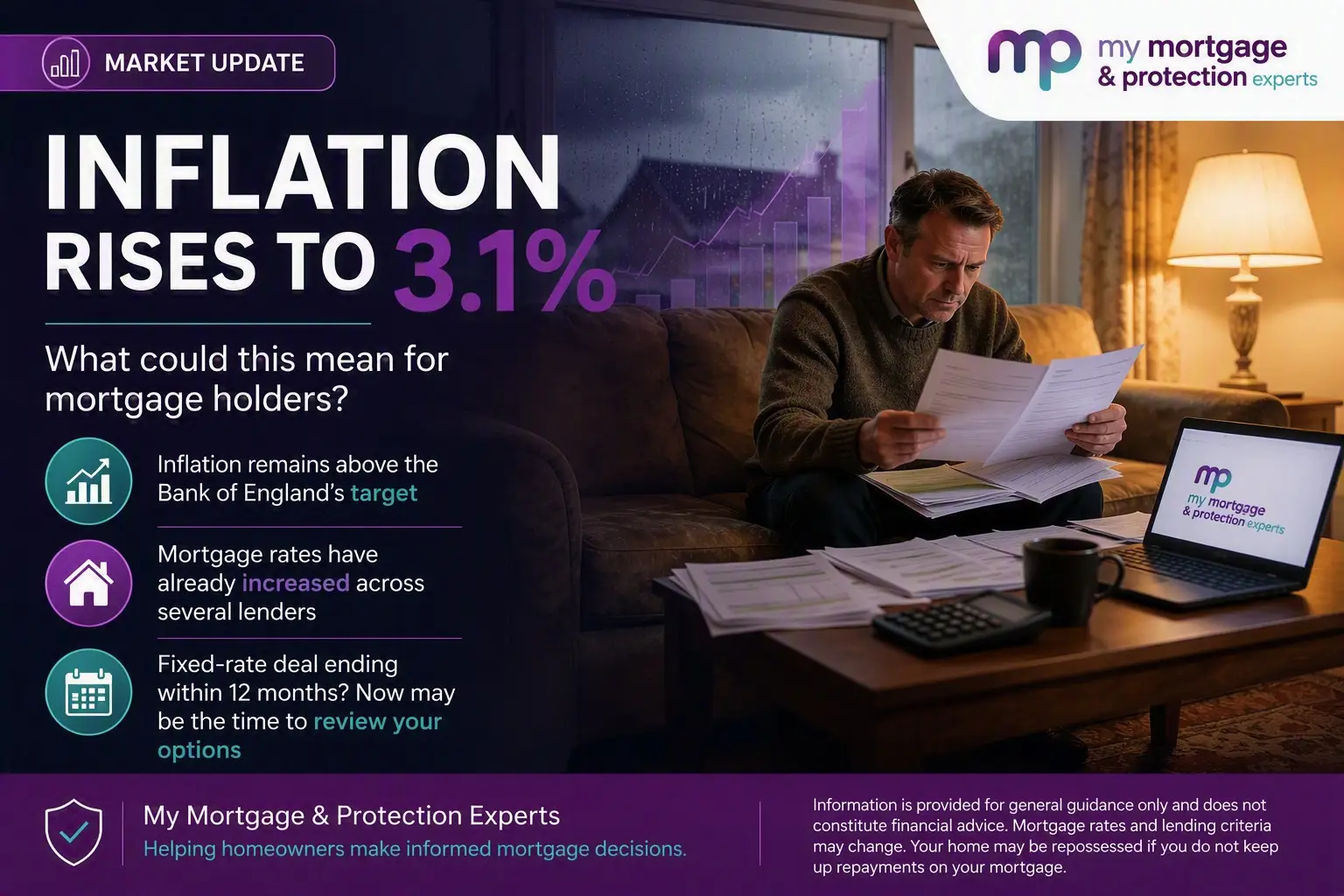
With inflation at 3.1%, mortgage rates are back in the spotlight, and markets are watching closely for the Bank of England's next interest rate decisions. This article explains how the new inflation figure could affect mortgage rates, when to think about remortgaging, and what homeowners, first-time buyers and property investors can do to protect themselves.
Published in September 2026. Rates and figures in this article were correct at the time. For where things stand today, speak to an adviser.
Key takeaways
- Inflation rose to 3.1%, and markets were watching for the Bank of England's next interest rate decisions.
- Mortgage rates often move before the Bank of England changes the base rate, so reviewing early can be valuable.
- Approximately 20% of UK borrowers were on variable or tracker rates and would see changes in their monthly payments directly.
- Many homeowners start reviewing their options between 3 and 12 months before their current deal ends.
- A mortgage review is also a good time to check your life assurance, critical illness cover, income protection and home insurance.
How does the 3.1% inflation rise affect mortgage rates in 2026?
The rise in inflation to 3.1% has a real bearing on UK mortgage interest rates and borrowing costs. When inflation rises, the Bank of England typically responds by adjusting the base rate to control economic activity. As a result, homeowners need to be prepared for changes in mortgage rates.
Many borrowers coming to the end of fixed rate deals arranged in recent years may find that current rates are significantly higher than when their existing deal was secured. Approximately 20% of UK borrowers are on variable or tracker rates. They see changes in their monthly payments directly as rates respond to inflation.
What links inflation and mortgage rate changes?
Inflation and mortgage rates are closely linked, mainly through the Bank of England's monetary policy. When inflation rises, the Bank often raises the base rate to bring it back under control.
Historically, periods of rising inflation have tended to go hand in hand with rising mortgage rates. That's why it helps borrowers to keep an eye on the economic indicators that can affect their mortgage costs.
Why rates can move before the Bank acts
Fixed rate mortgages are priced from swap rates, which reflect what markets expect the base rate to do in future. So a higher inflation figure can push fixed rates up within days, even if the base rate hasn't changed.
What are the mortgage rate predictions for 2026?
Future mortgage rate movements remain uncertain. Many analysts believe inflation will continue to influence mortgage pricing throughout 2026, which is why homeowners should think carefully about their borrowing options in light of the wider economic picture.
When is the right time to remortgage during rising inflation in 2026?
Timing your remortgage matters, especially when inflation is rising. Keep an eye on market movements and interest rate forecasts, so you can secure a deal that suits you before any further rate increases.
Understanding when to lock in a fixed rate can help protect you from rising costs. Many lenders let you secure a new rate some months before your current deal ends, which gives you a safety net while you keep your options open. Our guide on when you can remortgage before your fixed rate ends explains how that works.
You can also add your date to our mortgage end date register, so we can get in touch when it's time to review.
Should you choose a fixed or variable rate mortgage now?
In the current economic climate, a fixed rate can give you stability while inflation is rising. You'll have a consistent repayment amount, which is particularly helpful when rates are expected to rise.
Variable rate mortgages may start lower, but your monthly payments could increase if the Bank of England raises interest rates. Weigh up the certainty of a fixed rate against the potential benefits of a variable one, based on your own finances.
How do product transfers help with inflation-linked rate changes?
A product transfer lets you switch to a new mortgage product with your current lender, without going through an entirely new application. It can be a straightforward way to manage rising interest rates.
A product transfer may come with less paperwork, but it isn't always the right answer. Fees can still apply, and a remortgage to a different lender may offer a better rate or terms, so it's worth comparing both.
What should homeowners do if inflation is rising?

While nobody can predict future mortgage rates with certainty, homeowners may benefit from taking these steps:
- Review your mortgage arrangements if your deal ends within the next 12 months.
- Explore both product transfer and remortgage options.
- Check your affordability under different interest rate scenarios.
- Review your life assurance, critical illness cover and income protection.
- Check your home insurance renewal date and what your policy covers.
A review can help you understand the options available before market conditions change further. Have your payslips, bank statements, ID and proof of address to hand so it can move quickly.
What does rising inflation mean for first-time buyers?
Rising inflation doesn't only affect existing homeowners. It also shapes the market for first-time buyers trying to get onto the property ladder.
Higher living costs can make saving for a deposit harder. At the same time, changes to mortgage rates directly affect how much buyers can borrow and what their monthly payments will be.
Stress testing and how much you can borrow
Lenders apply stress testing to check whether a buyer could still afford their mortgage if interest rates rose further. As rates move in response to inflation, that threshold can shift, which may affect how much someone is able to borrow.
Lenders vary, and any borrowing figure is subject to status. First-time buyers are encouraged to speak to a mortgage adviser early, to understand affordability, deposit requirements and how lender criteria may apply, before house-hunting in earnest.
What homeowner protection should you consider amid inflation and remortgaging?
In a changing economic environment, it's important to review your protection properly. That includes your life assurance and mortgage protection, to make sure your cover still fits as your finances respond to rising interest rates and inflation.
Start by checking what you already have. That includes any cover through your employer, such as death in service or sick pay, as it can affect how much extra cover you need. Our annual protection review can help you check it all in one place.
How does inflation impact life assurance and mortgage protection policies?

Inflation can affect life assurance and mortgage protection policies through both the amount of cover you need and what it costs. As living costs rise, it's worth checking whether your existing cover still meets your financial commitments.
If it doesn't, there may not be enough to cover your outstanding debts and your family's costs if the worst happened. That's why regular reviews matter when prices are rising. You can check your household's financial safety net with our Financial Resilience Calculator.
Can bundling home insurance and life assurance save you money in 2026?
Some providers offer discounts when you hold more than one policy with them, such as home insurance and life assurance. That can help you manage your budget while keeping your protection in place.
Price is only part of the picture, though. The right starting point is the right cover for your circumstances, and only then the right price, so compare what each policy actually covers before deciding.
Related protection topics to review during a mortgage review
A mortgage review is also a natural opportunity to check that your wider protection still reflects your circumstances. Areas worth revisiting include:
- Life assurance, making sure cover still reflects the outstanding mortgage balance and any changes in family circumstances.
- Critical illness cover, checking whether the level of cover would support mortgage payments and living costs after a serious diagnosis.
- Income protection, checking that cover would replace enough income to meet mortgage and household commitments if you were unable to work.
- Family income benefit, considering whether your dependants would have ongoing financial support if you died during the mortgage term.
- Home insurance, confirming that buildings and contents cover is still adequate as rebuild costs and the value of your belongings change.
Reviewing these alongside a mortgage or remortgage helps your protection keep pace with your financial commitments and life changes.
What should property investors know about inflation and financing costs in 2026?

For property investors, understanding how inflation affects rental yields and financing costs is essential for making informed decisions. Higher running costs caused by inflation may eat into profit margins and affect overall returns.
How does inflation affect rental yields and investment returns?
Inflation increases running costs, such as maintenance, insurance and agent fees, and that directly affects rental yields. Investors may need to raise rents to protect their margins.
However, large rent increases may put off tenants. Investors need to strike a balance between keeping the property viable and keeping it affordable for tenants.
What financing changes should investors anticipate this year?
Property investors should be prepared for higher borrowing costs if inflation persists. Rising interest rates can make financing more expensive, so planning ahead matters.
Some investors choose fixed rate options to reduce the risk of changing borrowing costs. Reviewing your portfolio's finance well before each deal ends can help protect it against market instability.
Our view
At My Mortgage & Protection Experts, our most important message for homeowners is not to panic, but to plan. Mortgage rates often move before the Bank of England changes the base rate, and nobody can predict those movements with certainty, so getting advice early helps you decide based on your own circumstances rather than the headlines. If your deal is due for review in the next 12 months, take a look at our remortgage options.
Stay ahead of your mortgage renewal.
Your mortgage deal doesn't need to be ending soon for you to start planning ahead. Register your mortgage end date with My Mortgage & Protection Experts and we can contact you at the right time to review your options.
Whether your deal ends in a few months or further down the line, we'll help you stay one step ahead.
Register your mortgage end date- 1Register your end dateNo obligation and no cost.
- 2We get in touch at the right timeBefore your deal ends, so there's time to plan.
- 3We review your optionsYour lender's offer against the wider market.
Frequently asked questions
Will inflation affect my mortgage payments?
If you have a variable, tracker or discounted variable mortgage, rising interest rates may increase your monthly payments. Fixed rate borrowers are protected until their deal ends.
Should I remortgage before my fixed rate ends?
Many lenders allow borrowers to secure a new deal several months before their existing mortgage deal expires. That can help protect against future rate rises.
What happens if inflation continues to rise?
Persistent inflation may influence future Bank of England decisions and funding markets, which in turn can affect mortgage pricing.
When should I review my mortgage?
Many homeowners start reviewing their options between 3 and 12 months before their current deal ends.
Should I review my protection policies when remortgaging?
Yes, a mortgage review is a natural time to look at life assurance, critical illness cover, income protection and home insurance. Check what you already have, including any death in service or sick pay from your employer.