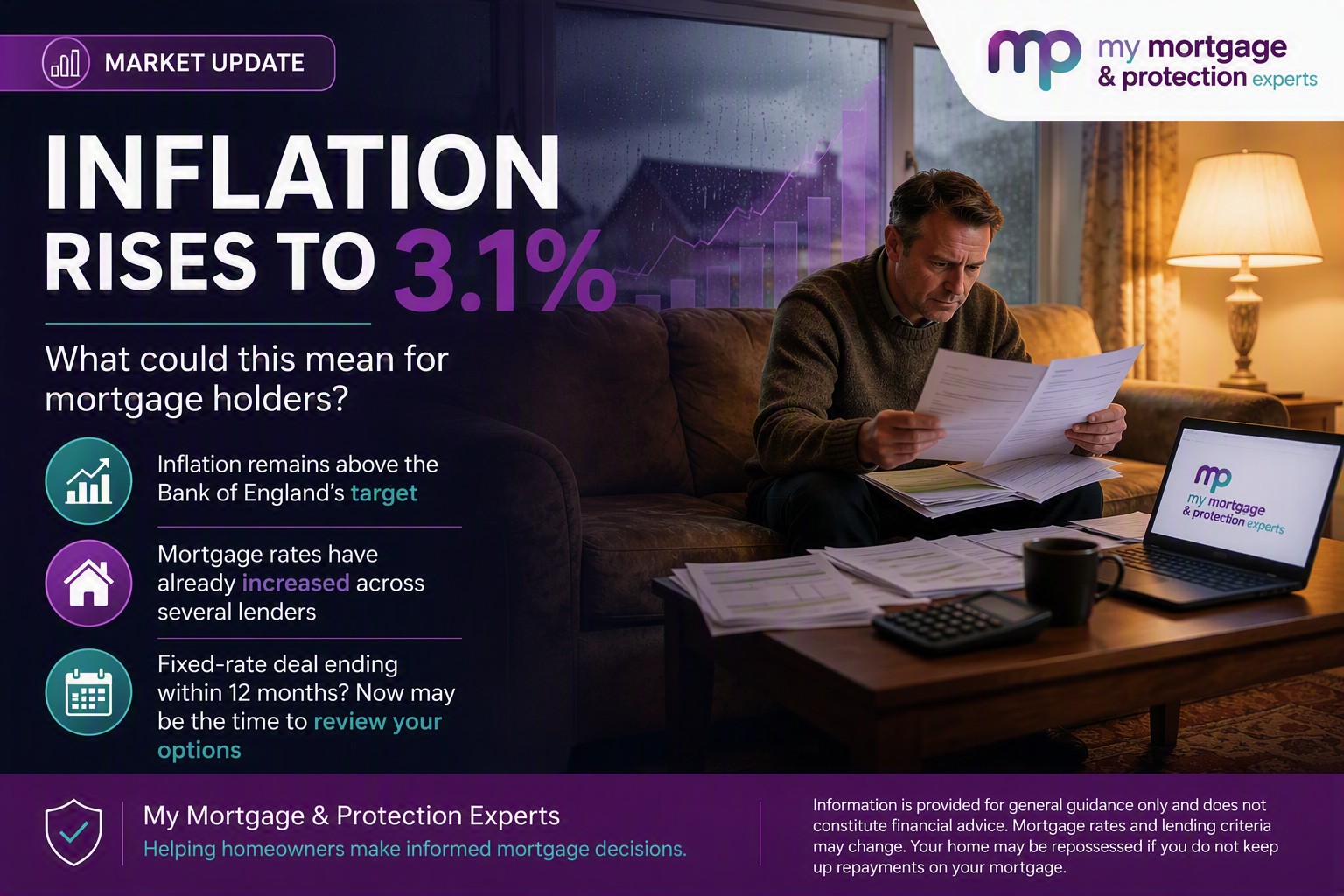
As inflation rises to 3.1%, UK homeowners face critical decisions regarding their mortgages and remortgaging strategies. With markets closely watching future Bank of England interest rate decisions following the latest inflation data, understanding the implications of these changes is paramount for homeowners and property investors alike. This article will explore how the new inflation rate affects mortgage rates, optimal remortgaging timing, and necessary homeowner protections amidst economic fluctuations. By delving into these topics, readers will gain insight into the current mortgage landscape and how to navigate it effectively.
MMPE’s View
At My Mortgage & Protection Experts (MMPE), we believe the most important message for homeowners is not to panic, but to plan.
Mortgage rates often move before the Bank of England changes its base rate. That’s why reviewing options early can be valuable, particularly for homeowners approaching the end of a fixed-rate period.
While nobody can predict future interest rate movements with certainty, seeking advice early can help borrowers make informed decisions based on their own circumstances rather than reacting to market headlines.
How Does the 3.1% Inflation Rise Affect UK Mortgage Interest Rates in 2026?
The rise in inflation to 3.1% significantly impacts UK mortgage interest rates, leading to anticipated changes in borrowing costs. As inflation mounts, the Bank of England typically responds by adjusting the base rate to control economic activity. Consequently, homeowners must be prepared for fluctuations in mortgage rates. Many borrowers coming to the end of fixed-rate mortgage deals arranged in recent years may find that current mortgage rates are significantly higher than those available when their existing deal was secured. Approximately 20% of UK borrowers are currently on variable or tracker rates and can directly observe changes in their monthly payments as inflation rises.
What Links Inflation and Mortgage Rate Changes?
Inflation and mortgage rate adjustments are closely intertwined, primarily influenced by the Bank of England’s monetary policy. As inflation rates increase, the Bank often raises the base interest rate to stabilize the economy. Historical trends illustrate that during inflation spikes, mortgage rates tend to rise simultaneously, making it essential for borrowers to stay informed about economic indicators that may affect their mortgage costs.
What Are the Current Mortgage Rate Predictions for 2026?
While future mortgage rate movements remain uncertain, many analysts believe inflation will continue to influence mortgage pricing throughout 2026. This uncertainty underscores the importance for homeowners to carefully consider their borrowing options in light of the prevailing economic context.
When Is the Best Time to Remortgage During Rising Inflation in 2026?
Timing your remortgage is crucial, especially during periods of rising inflation. Homeowners should remain vigilant regarding market movements and interest rate forecasts to secure the best possible deal before further rate increases are enacted. By understanding when to lock in a fixed rate, borrowers can protect themselves from escalating costs.
Should You Choose Fixed or Variable Rate Mortgages Now?
Considering the current economic climate, opting for fixed-rate mortgages can provide stability amidst rising inflation. Fixed rates allow homeowners to secure a consistent repayment amount, which is particularly advantageous in an environment where rates are expected to rise. Conversely, while variable-rate mortgages may initially offer lower rates, they pose the risk of increasing monthly payments as the Bank of England raises interest rates. Homebuyers should weigh the advantages of fixed rates against the potential benefits of variable options, depending on their financial circumstances.
How Do Product Transfers Help You Navigate Inflation-Linked Rate Changes?
Product transfers can be an effective strategy for homeowners to manage rising interest rates. These transfers allow borrowers to switch to a new mortgage product without undergoing an entirely new application process. By completing a product transfer, homeowners can often secure better rates or more favourable terms, helping them navigate the inflationary landscape without incurring additional fees.
What Should Homeowners Do if Inflation Is Rising?
While nobody can predict future mortgage rates with certainty, homeowners may benefit from taking proactive steps:
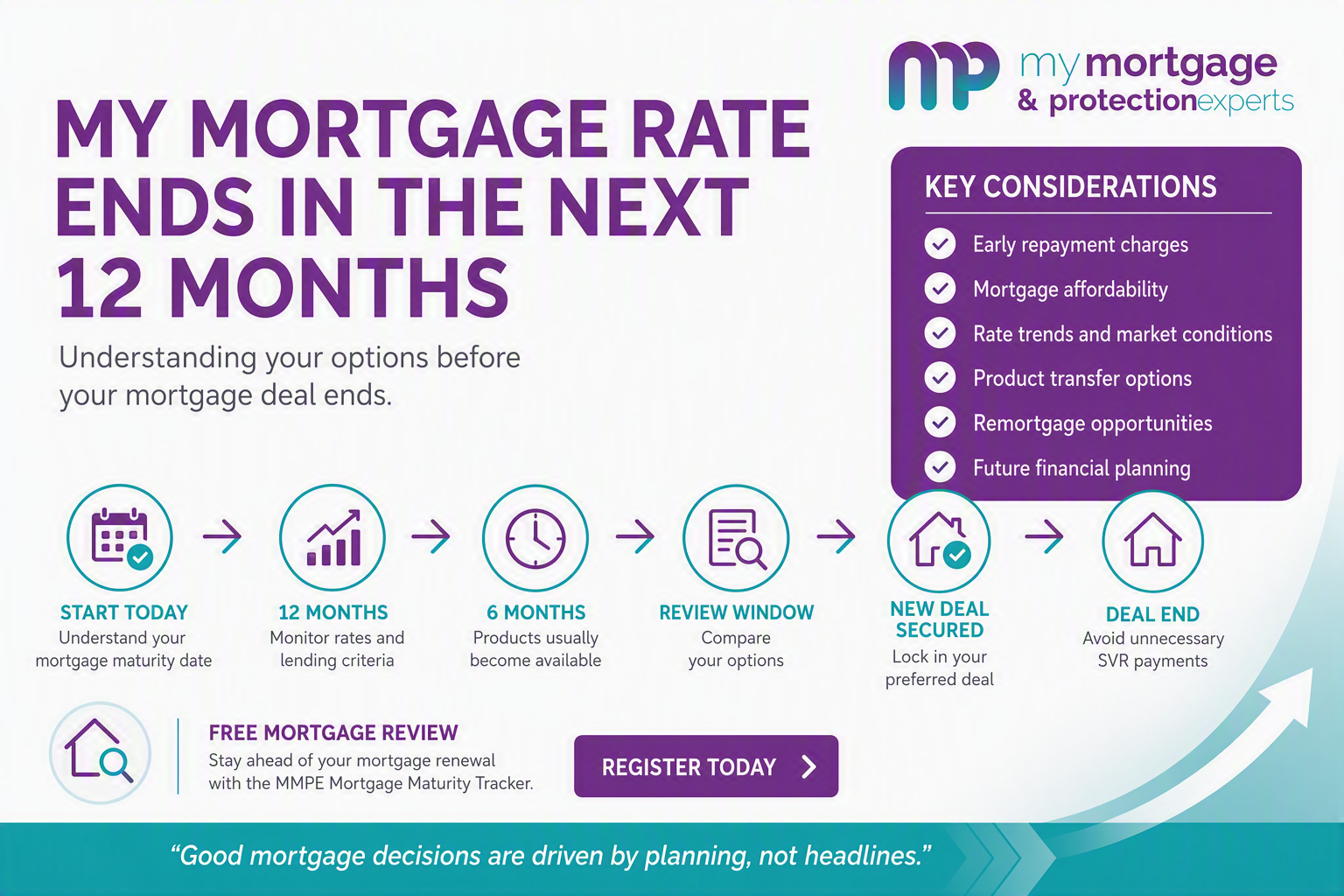
Review mortgage arrangements if your deal ends within the next 12 months
Explore product transfer and remortgage options
Assess affordability under different interest rate scenarios
Review life assurance, critical illness cover and income protection arrangements
Consider reviewing home insurance renewal dates and policy coverage
A proactive review can help homeowners understand the options available before market conditions change further.
What Does Rising Inflation Mean for First-Time Buyers?
Rising inflation doesn’t only affect existing homeowners — it also shapes the landscape for first-time buyers trying to get onto the property ladder. Higher living costs can make saving for a deposit more challenging, while changes to mortgage rates directly affect how much buyers can borrow and what their monthly payments will look like.
Lenders also apply stress testing to gauge whether a buyer could still afford their mortgage if interest rates were to rise further. As rates move in response to inflation, this stress testing threshold can shift, which may affect how much someone is able to borrow. First-time buyers are encouraged to speak with a mortgage adviser early to understand affordability, deposit requirements, and how lender criteria may apply to their circumstances before house-hunting in earnest.
What Homeowner Protection Should You Consider Amid Inflation and Remortgaging?
In a fluctuating economic environment, it is vital for homeowners to review their protection strategies comprehensively. This includes assessing life assurance policies and mortgage protection to ensure adequate coverage as financial circumstances may shift in response to rising interest rates and inflation. Evaluating current protection measures helps ensure financial resilience.
How Does Inflation Impact Life Assurance and Mortgage Protection Policies?

Inflation influences life assurance and mortgage protection policies by prompting adjustments in coverage amounts and premiums. As costs increase, policyholders need to evaluate whether their existing coverage adequately meets their financial commitments. Failure to do so may result in insufficient funds to cover outstanding debts in the event of unforeseen circumstances, making regular reviews essential in an inflationary climate.
Can Bundling Home Insurance and Life Assurance Save You Money in 2026?
Bundling home insurance and life assurance can lead to significant savings in the current economic climate. By consolidating policies with the same provider, homeowners may access discounts and improved coverage options. Such strategies can help individuals manage their budgets more effectively while ensuring comprehensive protection against risks associated with higher inflation rates.
Related Protection Topics to Review During a Mortgage Review
A mortgage review is also a natural opportunity to check that wider protection arrangements still reflect a homeowner’s circumstances. Areas worth revisiting include:
Life Assurance — ensuring cover still reflects the outstanding mortgage balance and any changes in family circumstances
Critical Illness Cover — reviewing whether the level of cover would be sufficient to support mortgage payments and living costs following a serious diagnosis
Income Protection — checking that cover would replace enough income to meet mortgage and household commitments if unable to work
Family Income Benefit — considering whether dependants would have ongoing financial support in the event of a death during the mortgage term
Home Insurance — confirming that buildings and contents cover remains adequate as rebuild costs and asset values change
Reviewing these alongside a mortgage or remortgage helps ensure protection arrangements keep pace with both financial commitments and life changes.
What Should Property Investors Know About Inflation and Financing Costs in 2026?

For property investors, understanding how inflation affects rental yields and financing costs is essential for making informed decisions. Higher operational costs related to inflation may erode profit margins, directly affecting overall investment returns. Investors should anticipate changes in financing conditions and adjust their strategies accordingly to maintain profitability.
How Does Inflation Affect Rental Yields and Investment Returns?
Inflation leads to increased operational costs, which directly impact rental yields. As costs rise, property investors may need to increase rents to maintain their profit margins. However, significant increases may deter potential tenants, complicating rental strategies. Thus, it’s crucial for investors to strike a balance between operational viability and tenant affordability.
What Financing Changes Should Investors Anticipate This Year?
Property investors should prepare for a landscape of increased borrowing costs as inflation persists. With rising interest rates, securing financing may become more expensive, necessitating strategic planning for capital allocation. Investors are encouraged to explore fixed-rate options to mitigate risks associated with fluctuating borrowing costs. By addressing these factors proactively, they can safeguard their investment portfolios against potential market instability.
Final Thoughts
Inflation rising to 3.1% is another reminder that economic conditions can change quickly. While future mortgage rate movements remain uncertain, homeowners approaching the end of a fixed-rate mortgage should consider reviewing their options sooner rather than later.
Whether you are remortgaging, purchasing your first home, reviewing protection arrangements or expanding a property portfolio, understanding your options today can help you make more informed decisions tomorrow.
Frequently Asked Questions
Will inflation affect my mortgage payments?
If you have a variable, tracker or discounted variable mortgage, rising interest rates may increase your monthly payments. Fixed-rate borrowers are protected until their deal ends.
Should I remortgage before my fixed rate ends?
Many lenders allow borrowers to secure a new deal several months before their existing mortgage expires, helping protect against future rate rises.
What happens if inflation continues to rise?
Persistent inflation may influence future Bank of England decisions and funding markets, which in turn can affect mortgage pricing.
When should I review my mortgage?
Many homeowners start reviewing options between 3 and 12 months before their current deal ends.
Should I review my protection policies when remortgaging?
A mortgage review is often an ideal time to review life assurance, critical illness cover, income protection and home insurance arrangements.
Speak to MMPE

If your mortgage, remortgage or fixed-rate deal is due for review within the next 12 months, our advisers can help you understand your options and assess whether your current mortgage and protection arrangements remain suitable.
Whether you’re a homeowner, first-time buyer or property investor, obtaining advice early can help you make informed decisions in a changing market.