Having a Policy Is One Thing. Making Sure It Still Works for You Is Another.
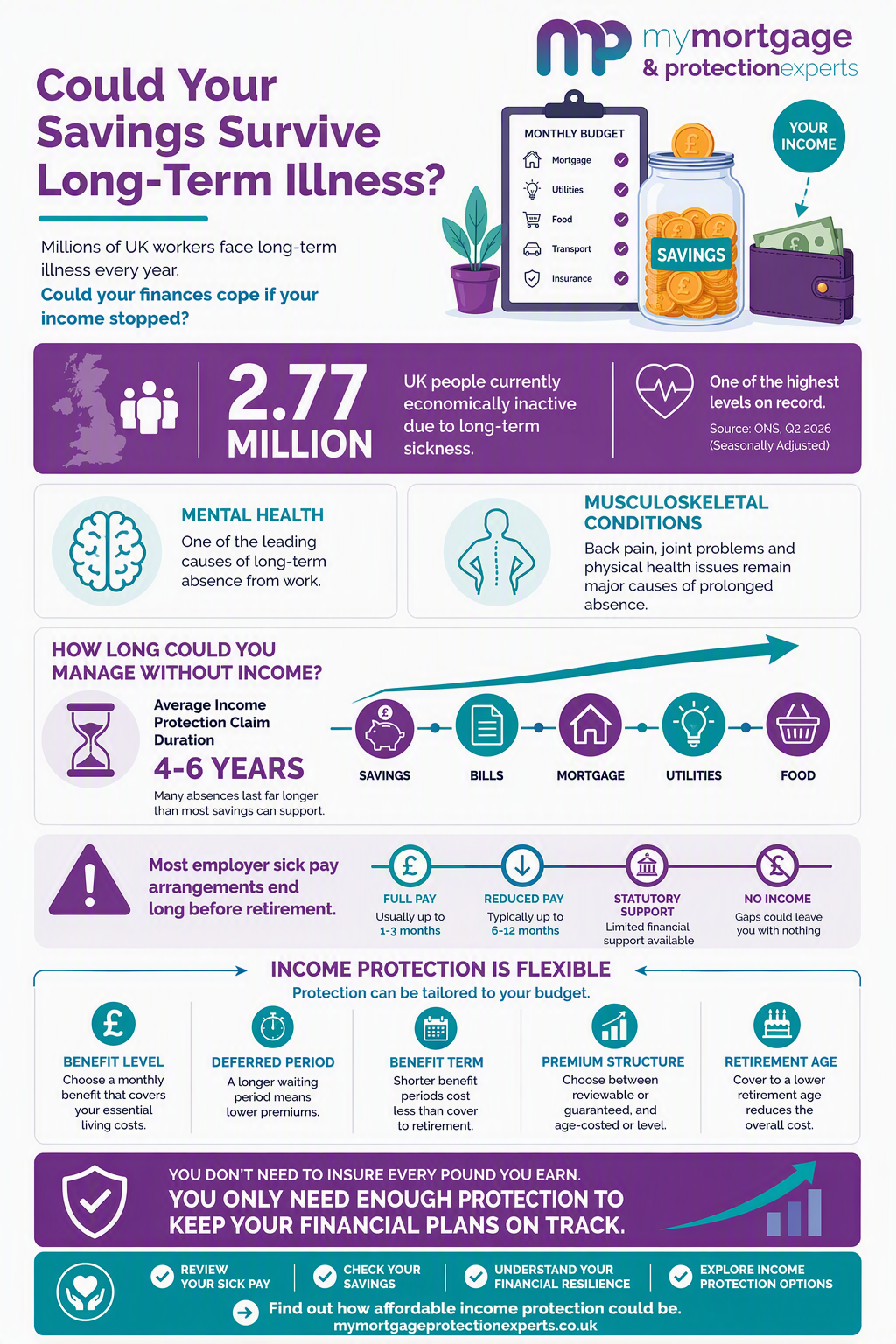
Income Protection Awareness Week often focuses on people who don’t have cover.
But what about the millions who already do?
Having an Income Protection policy is a positive step. It demonstrates that you’ve recognised the importance of protecting your income and the role it plays in supporting your household finances.
However, there’s a question many policyholders haven’t asked themselves in years:
When was the last time your policy was reviewed?
While your policy may still be active, your life has probably changed significantly since it was first arranged.
And if your circumstances have changed, there’s a possibility your cover may no longer reflect your needs.
Life Doesn’t Stand Still
Think back to when your policy was first arranged.
Since then, you may have:
- Changed jobs
- Received pay rises
- Taken on a larger mortgage
- Started a family
- Become self-employed
- Reduced your working hours
- Changed employers
- Built up savings
- Taken on additional financial commitments
Each of these changes can affect how much cover you need and how suitable your policy remains.
Yet many policies are often placed on a shelf and forgotten about until a renewal notice arrives.
The danger isn’t that the policy stops working.
The danger is that it no longer aligns with your current circumstances.
The Biggest Assumption Existing Policyholders Make
Many people take comfort from a simple thought:
“I’ve got Income Protection, so I’m covered.”
Perhaps.
But protection planning is rarely that straightforward.
A better question to ask is:
“If I had to claim tomorrow, would this policy still do the job I expect it to do?”
That’s a very different conversation.
Is the Benefit Amount Still Appropriate?
A policy arranged ten years ago may have been perfectly suitable at the time.
However, household spending often increases over time.
Mortgage payments, childcare costs, food bills, transport costs and general living expenses may all have changed significantly.
The key question is:
Would the benefit still provide meaningful financial support today?
Having cover is important, but ensuring the level of cover remains relevant is equally important.
Have Your Employer Benefits Changed?
Your deferred period may have originally been structured around an employer sick pay scheme that no longer exists.
Perhaps you’ve:
- Changed employers
- Received enhanced sick pay benefits
- Moved to reduced benefits
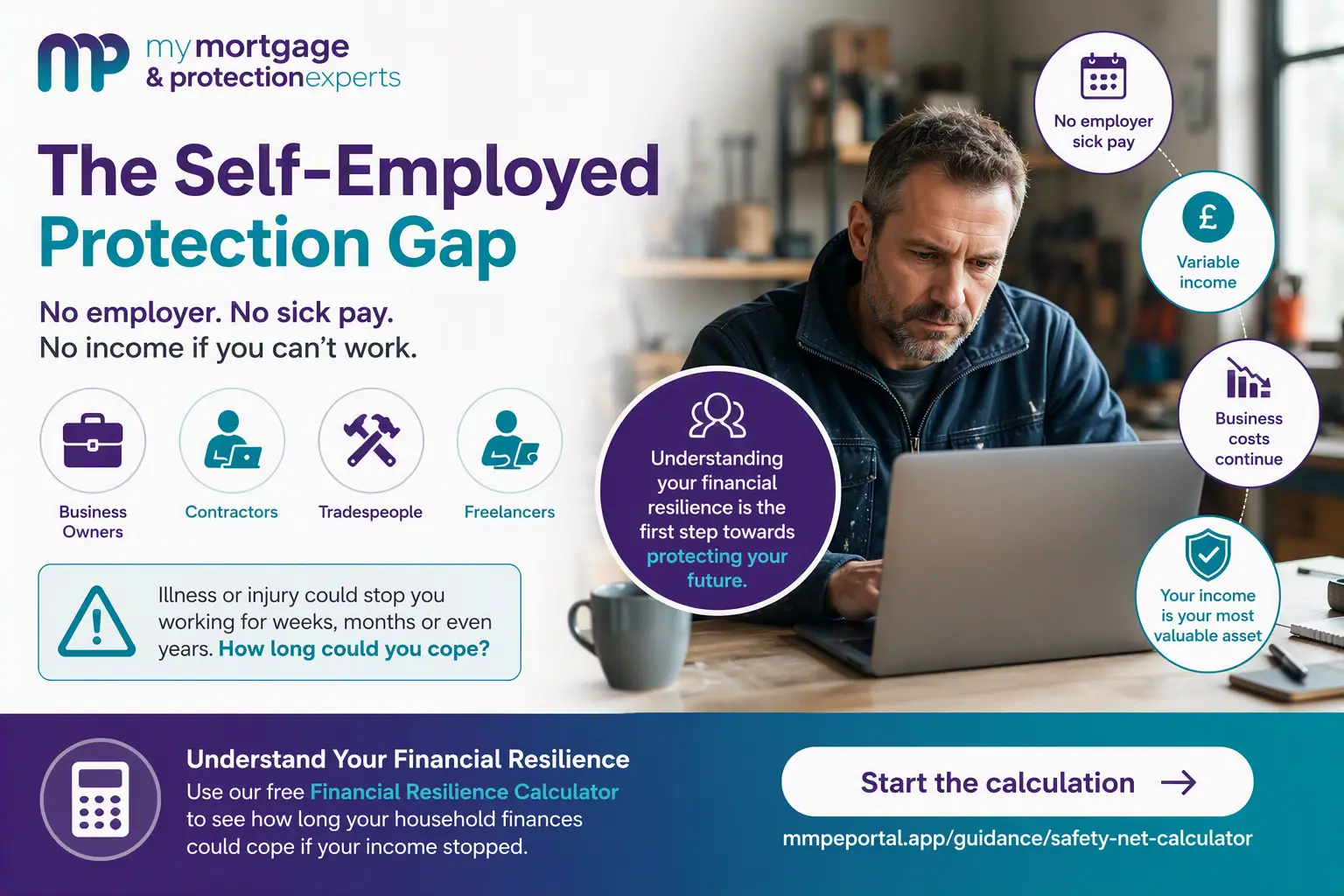
- Become self-employed
A review can help ensure your deferred period still aligns with your workplace benefits and overall financial circumstances.
Does Your Occupation Still Match?
Many policies are arranged based on your occupation and duties at the time of application.
Since then, have you:
- Taken on managerial responsibilities?
- Changed industry?
- Become self-employed?
- Started your own business?
- Reduced your working hours?
These changes do not necessarily create a problem, but they may affect whether your existing arrangements remain suitable.
Have Inflation and Rising Costs Eroded Your Protection?
One of the most common blind spots is inflation.
Many households have experienced significant increases in:
- Mortgage payments
- Rent
- Utility bills
- Food costs
- Childcare expenses
- Insurance premiums
A benefit amount that felt sufficient several years ago may not provide the same level of financial support today.
This is one of the reasons regular reviews remain important long after a policy has been arranged.
Financial Resilience Isn’t Just About Having Cover
Income Protection is only one piece of the puzzle.
True financial resilience is about understanding how all the pieces fit together.
For example:
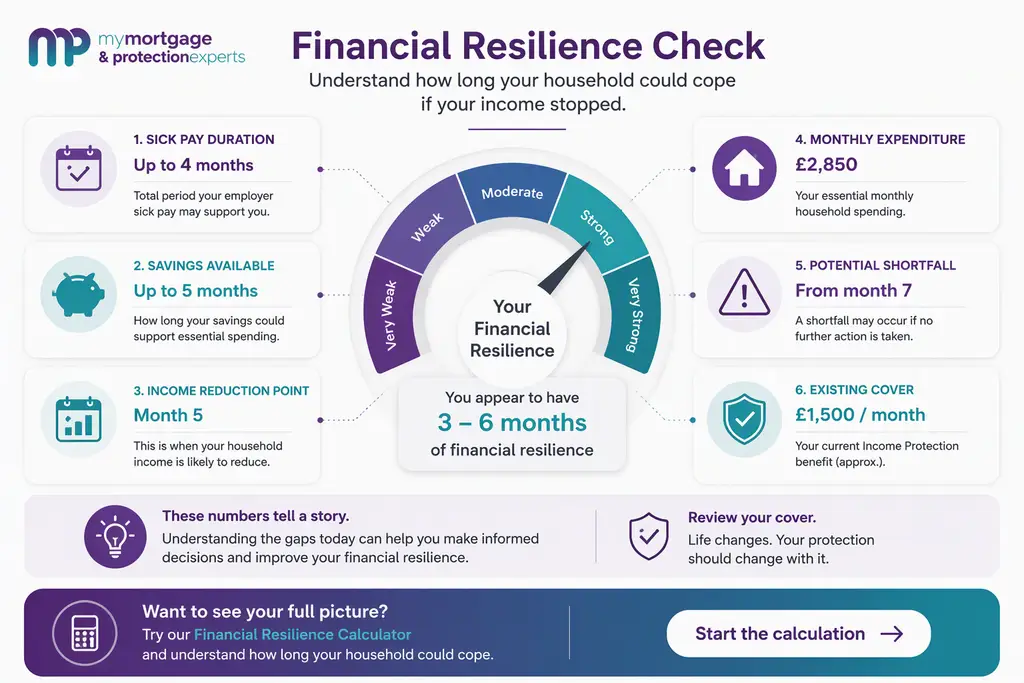
- How long would employer sick pay support you?
- What savings do you have available?
- When would household income reduce?
- How much income does your household actually need?
- Would there still be a shortfall?
Many people discover they haven’t revisited these questions since the day their policy was arranged.
Test Your Assumptions
One of the easiest ways to start is by understanding your household’s current financial resilience.
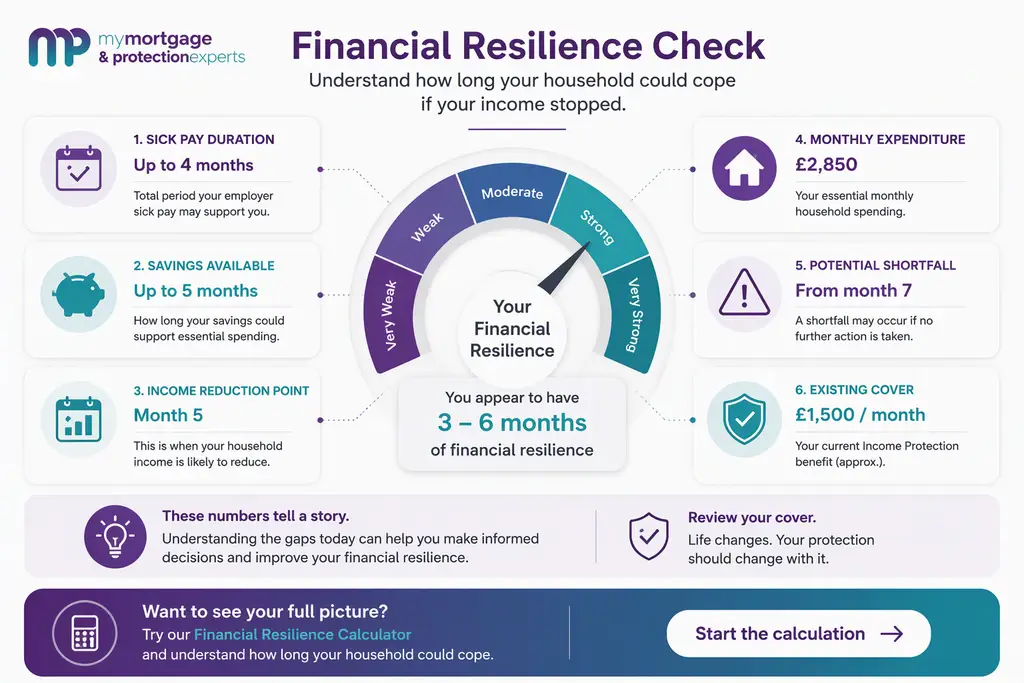
Our Financial Resilience Calculator helps you assess:
✅ How long employer sick pay could support you
✅ When household income may reduce
✅ How long savings could last
✅ Whether a financial shortfall could develop
✅ How resilient your household finances really are
Even if you already have Income Protection, the calculator can help identify whether your protection arrangements still align with your current circumstances.
Try the Financial Resilience Calculator
A Good Protection Plan Should Grow With You
Income Protection is not something that should be arranged once and forgotten.
The most effective protection plans evolve alongside your life, career, income and financial commitments.
If your circumstances have changed since your policy was first recommended, it may be worth reviewing whether your cover still reflects your needs today.
Because the most important question isn’t:
“Do I have Income Protection?”
It’s:
“Would it still do the job I expect it to do if I needed it tomorrow?”
A policy review can provide reassurance that your cover remains suitable, highlight any gaps that may have emerged over time, and help ensure your protection continues to support the life you’re living today, not the life you were living when the policy was first arranged.
Important Information
This article is intended for general information purposes only and does not constitute financial advice. Existing protection policies should not be cancelled, amended or replaced without fully considering the benefits, exclusions, underwriting terms, guarantees and costs involved. Professional advice should always be sought before making decisions regarding protection arrangements.