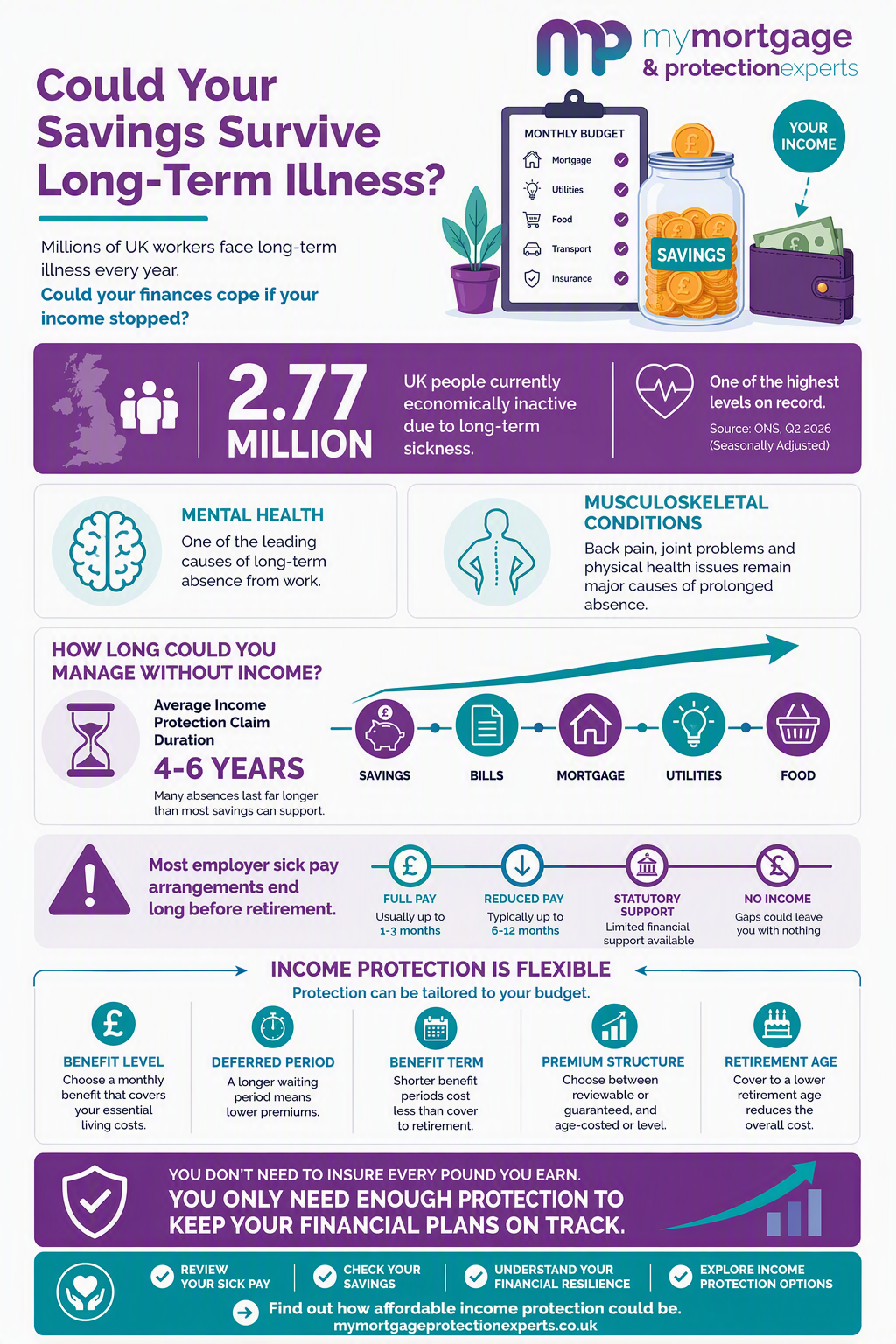
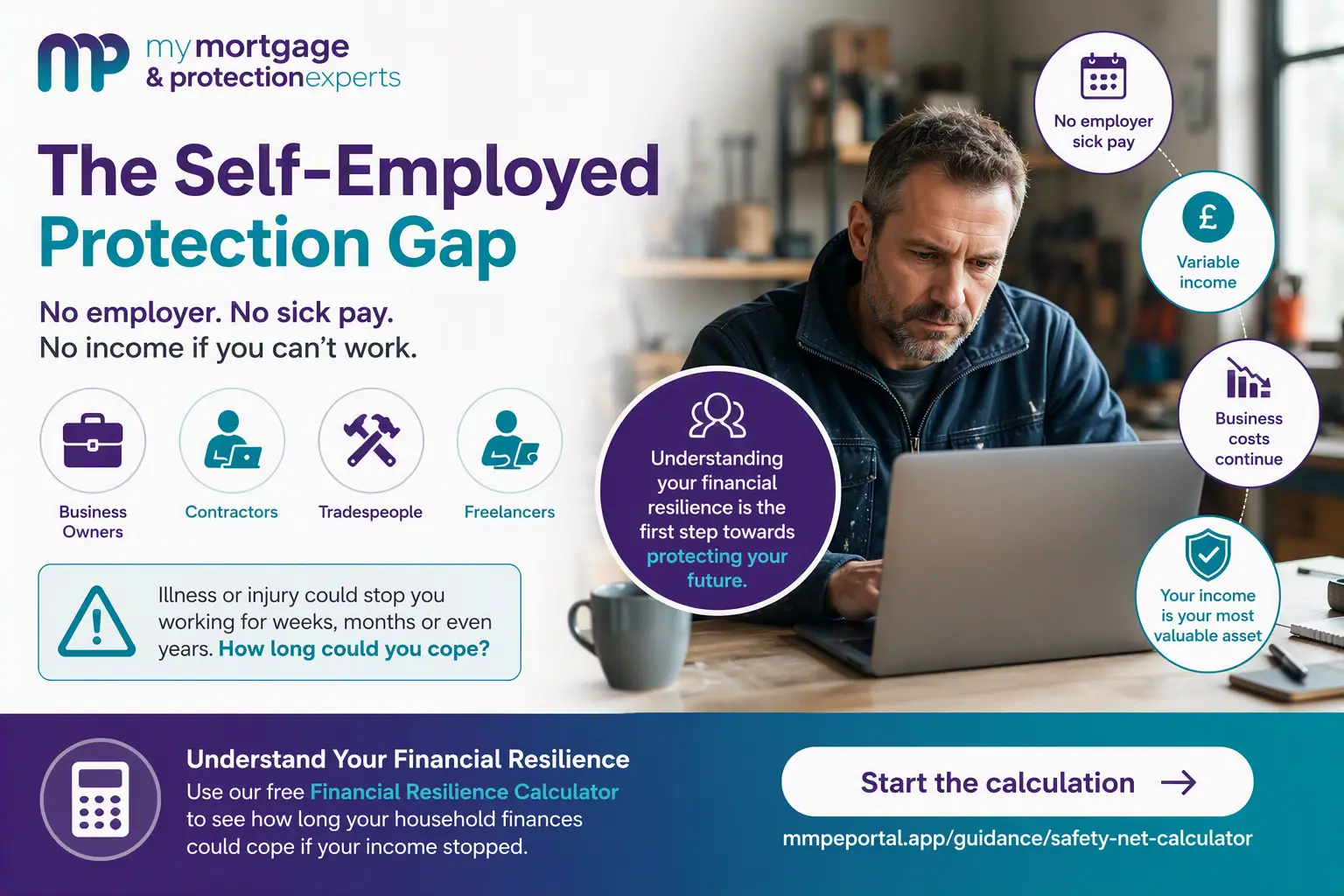
For employees, illness can mean a period of sick pay. For the self-employed, it can mean no income at all.
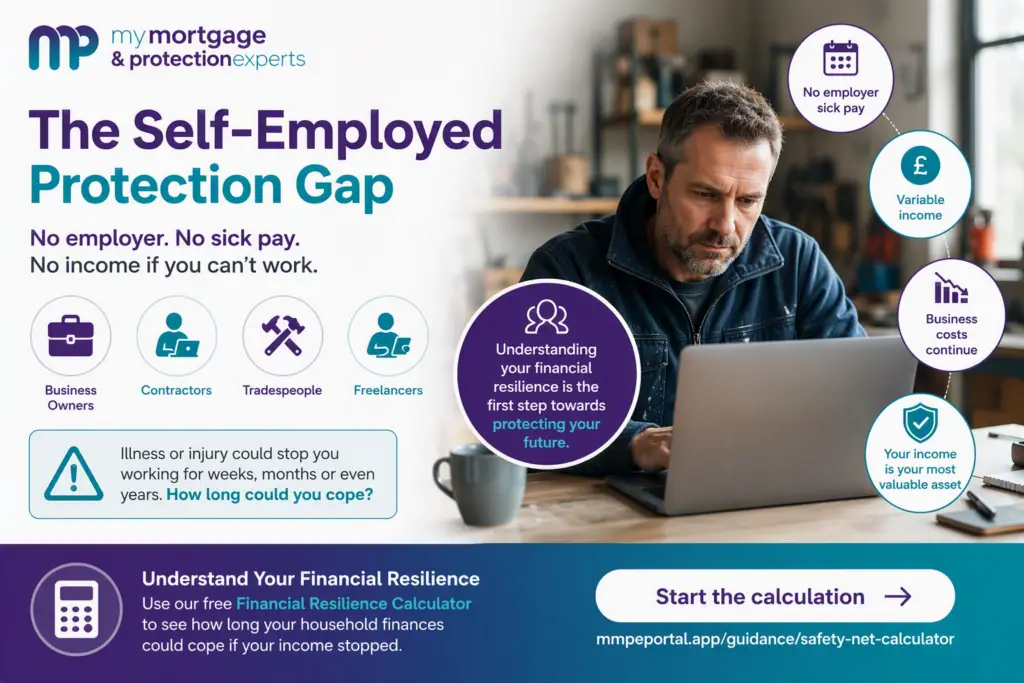
Income Protection Awareness Week often focuses on the importance of protecting your income.
But for self-employed people, business owners, contractors and tradespeople, the conversation can be even more important.
Because unlike employees, many self-employed workers don’t have an employer providing sick pay, enhanced workplace benefits or a HR department helping them navigate an extended absence from work.
For many, if work stops, income stops too.
And that’s where a significant protection gap often exists.
The Reality of Self-Employment
Being self-employed offers freedom, flexibility and the opportunity to build something of your own.
But it also means taking responsibility for risks that employees may not face in the same way.
Most self-employed people are used to thinking about:
- Winning new business
- Managing cash flow
- Paying suppliers
- Meeting payroll
- Keeping customers happy
What many don’t spend time thinking about is:
What happens if I cannot work for six months?
Or longer.
The answer often surprises people.
Because while many businesses can survive a slow month or even a difficult quarter, an unexpected illness or injury can create challenges that savings alone may struggle to absorb.
No Work Often Means No Income
For employees, there may be:
- Employer sick pay
- Death in service benefits
- Workplace protection schemes
- Occupational health support
For many self-employed people, none of these exist.
Whether you’re:
- A sole trader
- A contractor
- A company director
- A consultant
- A tradesperson
- A freelancer
your ability to generate income often depends on your ability to work.
The challenge is not just a loss of income.
It’s that many of your costs continue regardless.
Mortgage payments still fall due.
Household bills still arrive.
Business commitments may still need funding.
Life carries on even when earnings do not.
The Variable Income Challenge
One reason self-employed people sometimes overlook protection planning is that income does not always fit neatly into a monthly salary.
Some months are strong.
Others are quieter.
Projects start and finish.
Invoices are paid at different times.
This can make it difficult to answer a seemingly simple question:
How much income would I actually need if I couldn’t work?
Yet this is one of the most important questions to consider.
Protection planning isn’t necessarily about replacing every pound you earn.
It’s about understanding:
- Essential household expenditure
- Financial commitments
- Available savings
- Existing resources
- Potential income gaps
Without understanding those figures, it becomes extremely difficult to assess resilience.
Business Owners Face Two Risks
Business owners often face a double challenge.
The first risk is personal.
If illness prevents them from working, household income may immediately fall.
The second risk is commercial.
The business may also be affected.
For many owner-managed businesses, the owner is a key part of generating revenue.
If that person can’t work, business income may also reduce.
This can create pressure on both personal and business finances simultaneously.
Many business owners spend years building successful businesses but never fully assess how financially resilient they would be if they could not personally contribute to the business for an extended period.
Tradespeople and Physical Occupations
Tradespeople often face another challenge.
Many occupations depend heavily on physical capability.
A back injury.
A shoulder problem.
A broken limb.
A long-term illness.
Any of these could immediately affect the ability to work.
In occupations where earnings are directly linked to physical activity, even relatively common injuries can have a significant financial impact.
This isn’t about assuming the worst.
It’s simply recognising the relationship between health, work and income.
The Assumption Many Self-Employed People Make
One of the most common assumptions is:
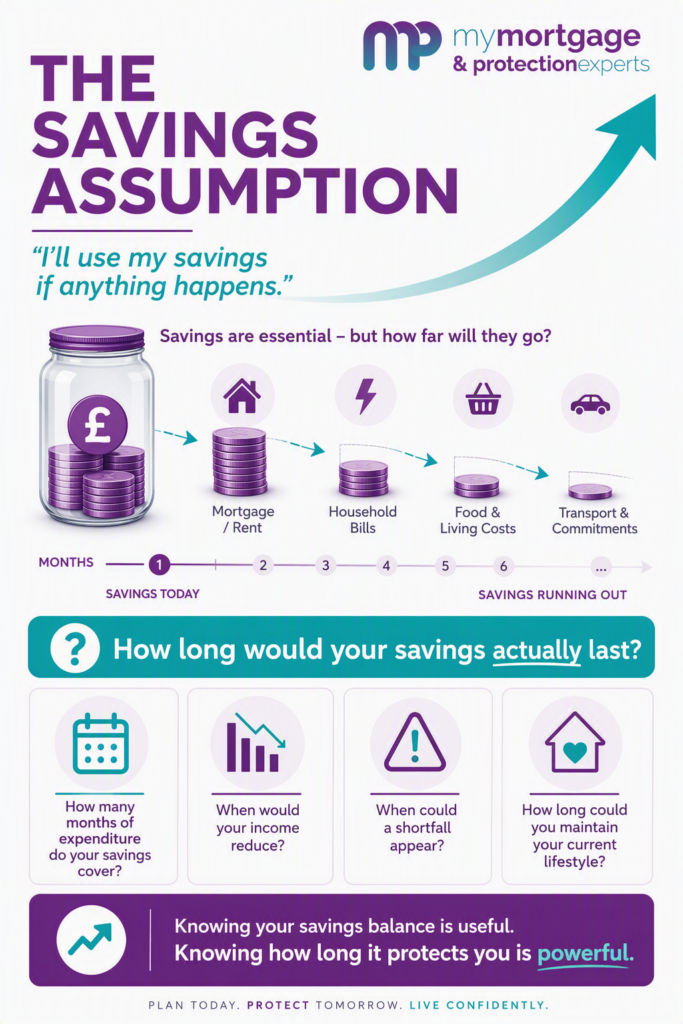
“I’ll use my savings if anything happens.”
Savings are incredibly important and should form part of every financial resilience plan.
However, a better question is:
How long would those savings actually last?
Many people know how much they have saved.
Far fewer know:
- How many months of expenditure those savings represent
- When income would reduce
- When a shortfall could emerge
- How long they could realistically maintain their current lifestyle
Understanding the difference can be eye-opening.
Financial Resilience Starts With Knowing Your Numbers
Before considering any protection solution, it is important to understand your existing position.
Questions worth asking include:
- How much do I need each month?
- What savings do I have available?
- How long would those savings last?
- Which costs are essential?
- What would happen if I couldn’t work for six months?
Many self-employed people have never performed these calculations.
Not because they don’t care, but because they have never had a reason to.
Until now.
Test Your Financial Resilience
To help households better understand their position, we created the Financial Resilience Calculator.
The calculator is designed as an educational tool to help you understand:
✅ How long your financial resources could support you
✅ When household income may reduce
✅ How long savings might last
✅ Whether a financial shortfall could develop
✅ Your overall financial resilience
The purpose isn’t to recommend products.
It’s to help turn assumptions into facts and provide a clearer understanding of where you stand today.
Try the Financial Resilience Calculator:
Start the calculation: Financial Resilience Calculator
Financial Resilience Is Part of Being Self-Employed
Successful self-employed people understand the importance of planning.
They plan for tax bills.
They plan for quiet periods.
They plan for business growth.
The question is whether they’ve also planned for the possibility of being unable to work.
Income is often the engine that drives both household finances and business success.
Understanding how resilient that engine is if illness or injury temporarily takes it off the road could be one of the most valuable financial exercises you undertake this year.
Because while we can’t always control unexpected events, we can take steps to understand their potential impact.
And that is where financial resilience begins.
This article is intended for general information purposes only and does not constitute financial advice. The suitability of any protection arrangement will depend on individual circumstances and professional advice should be sought before making financial decisions.